A Dashboard for Electronic Bill Payments
UX CASE STUDY

Introduction
Managing utility bills through traditional paper statements creates unnecessary friction for both residents and utility providers. Users struggle to track their monthly consumption, identify unusual usage, or access past bills when needed.
This project focuses on designing a digital dashboard that provides clear, real-time insights into electric and water usage, helping users understand their consumption and manage payments more efficiently.
PROBLEM
Users have little visibility into how much electricity or water they consume until a paper bill arrives. The lack of context, unclear usage patterns, and inconvenient payment methods often lead to confusion, missed payments, and limited control over monthly costs.
Solution
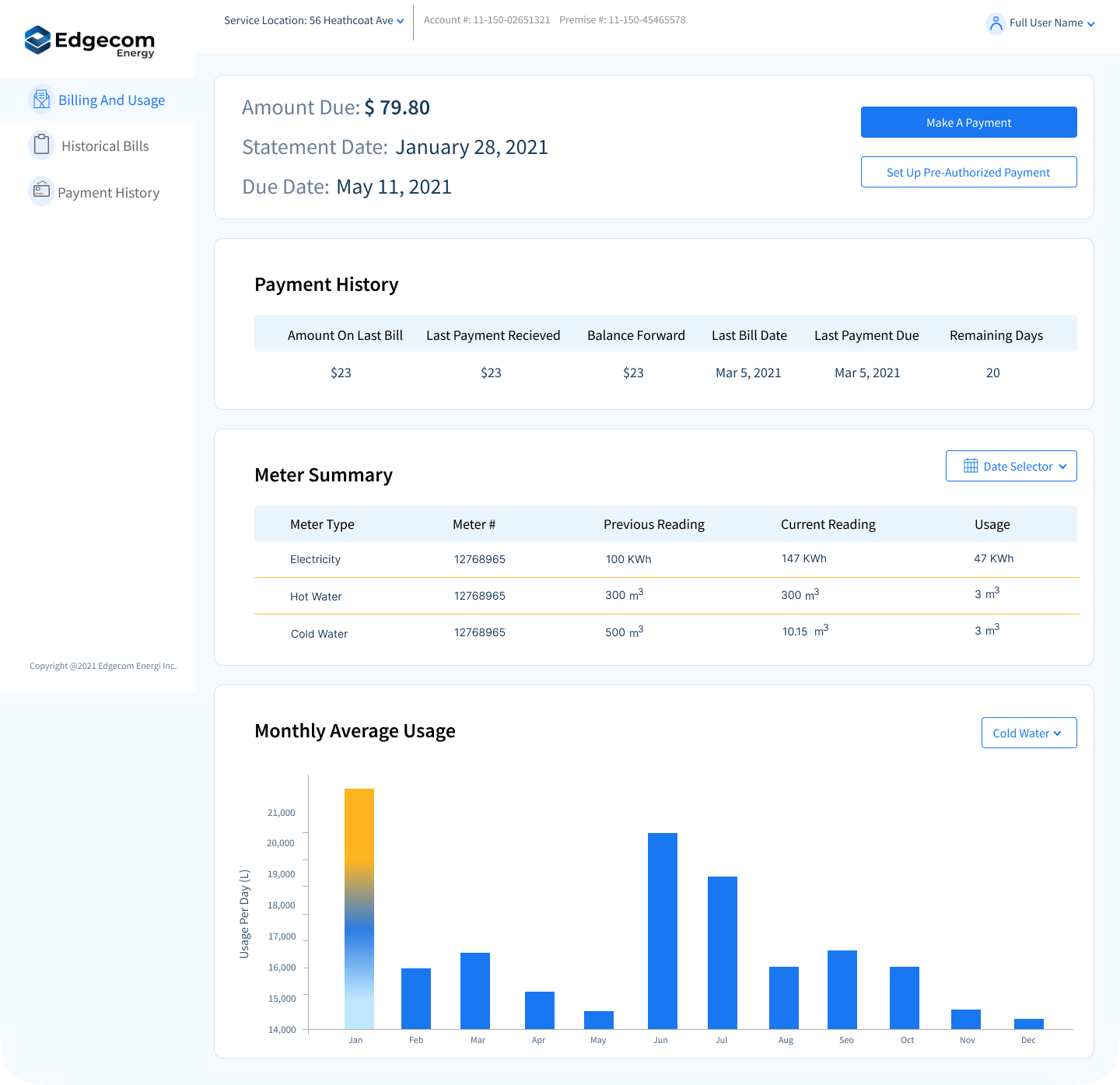
We designed a digital billing dashboard that allows residents to view real-time utility usage, track trends over time, compare consumption across periods, and pay bills through a simple and secure interface. The system reduces manual tracking, improves transparency, and supports more informed decision-making.

Discover
- Interview
- Categorize users Problems

Define
- Empathy map
- User journey map

Design
- Wireframe
- Design
DISCOVER
User Research
We conducted phone interviews with residents of a 110-unit apartment complex to understand how they currently receive, track, and pay their utility bills. The goal was to uncover real frustrations with paper billing and identify opportunities for a more transparent and user-friendly digital system. Interviews were carried out over 10 days and focused on uncovering behaviors, pain points, and expectations.
Interview Questions
We asked open-ended questions to explore how users receive, manage, and pay their bills, and what challenges they face with paper-based statements.
Their experience receiving and managing paper utility bills
Challenges they faced with tracking usage and due dates
Pain points in the traditional payment process
Preferences for digital vs. paper billing
Understanding of consumption patterns
Interest in using a digital dashboard
User Insights
Users struggle to track multiple bills and often forget payment deadlines.
Paper bills lack usage context, making it difficult to understand consumption patterns.
Users want a clearer way to see historical usage and compare trends.
Many residents are open to a digital platform if it is simple and secure.
Manual tracking of consumption is time-consuming and error-prone.
DEFINE
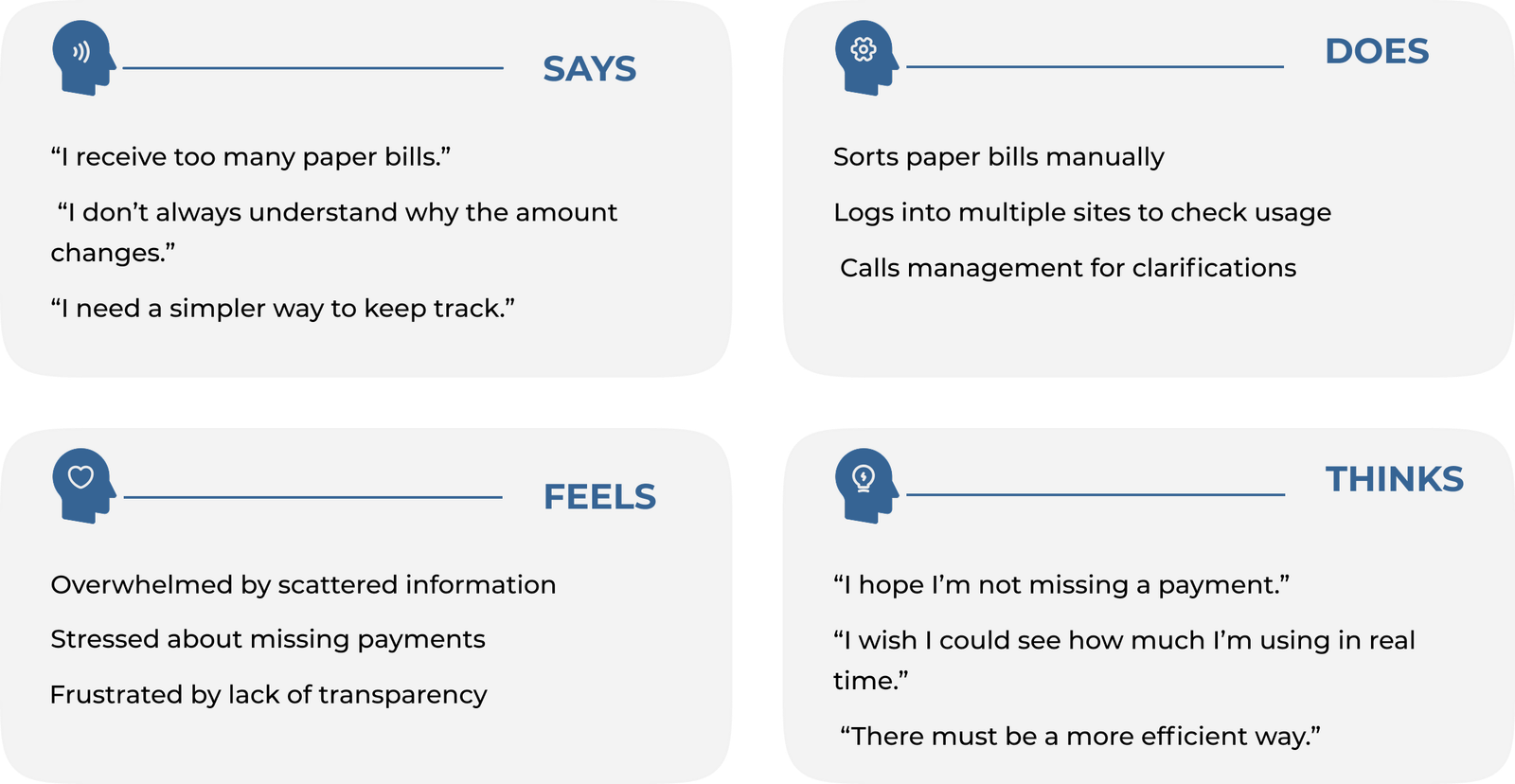
EMPATHY MAP
The empathy map helped translate interview insights into a deeper understanding of users’ behaviors, concerns, and motivations when managing their bills. It highlighted pain points around tracking payments, understanding usage, and dealing with scattered information.

GAIN
• Clear, real-time visibility into electricity and water usage.
• A centralized, organized dashboard for viewing bills, history, and payments in one place.
• A smoother, faster, and more transparent billing experience that reduces stress and confusion.

PAIN POINTS
• Users cannot easily track their monthly consumption or understand usage patterns.
• Managing multiple paper bills and remembering due dates leads to missed or late payments.
• Bills lack clarity and context, making it difficult to identify unusual charges or changes in usage.
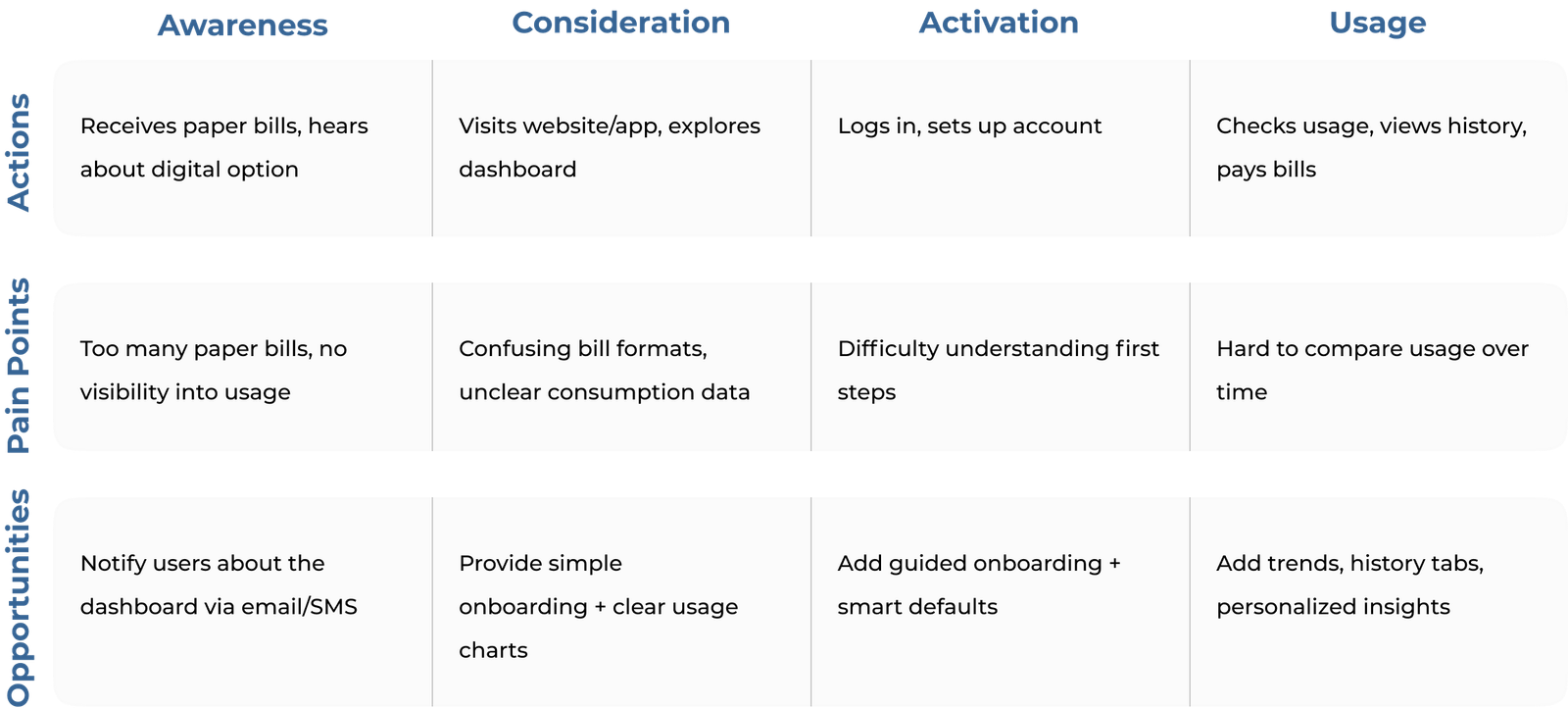
USER JOURNEY MAP
The user journey map highlights the key steps residents take when managing their bills and reveals the pain points where a digital dashboard can create meaningful improvements.
DESIGN
WIREFRAME
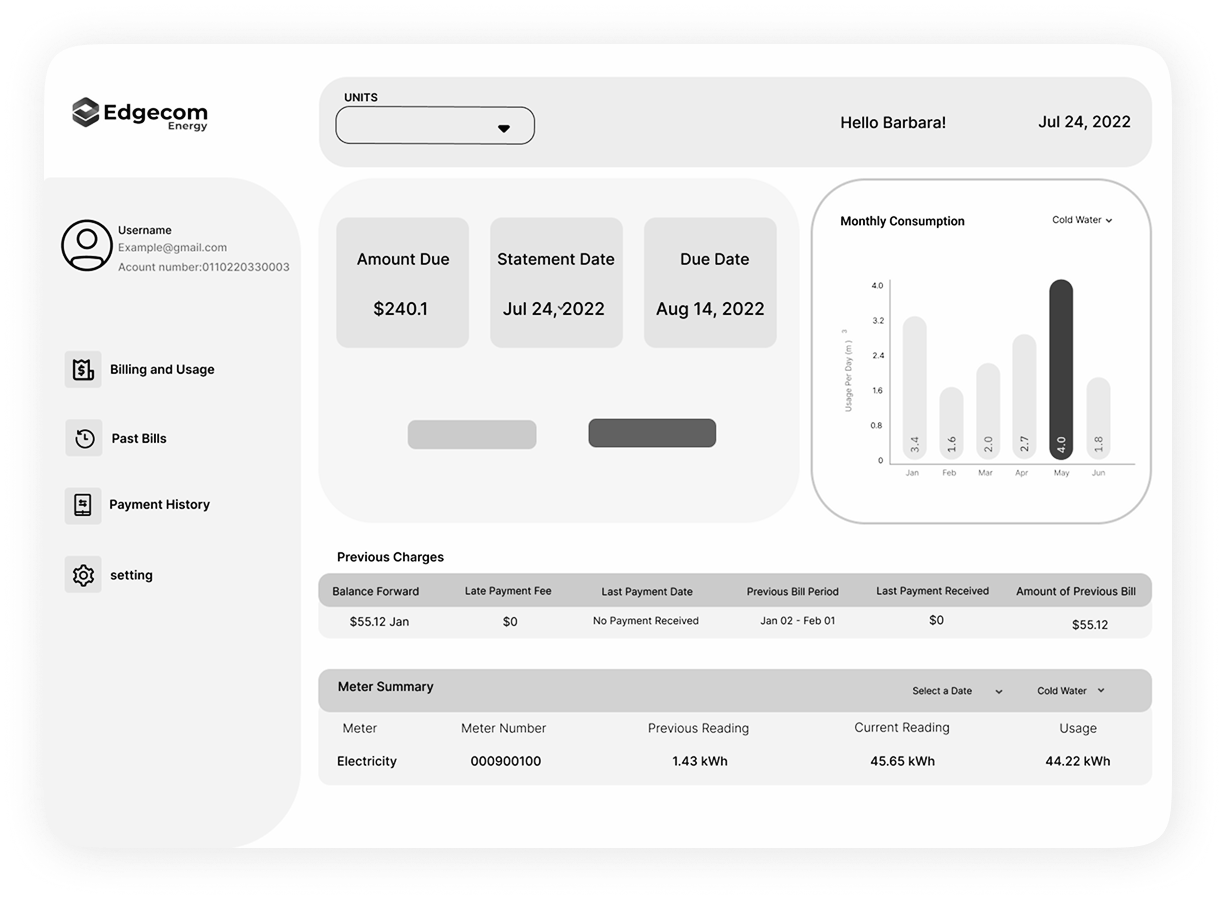
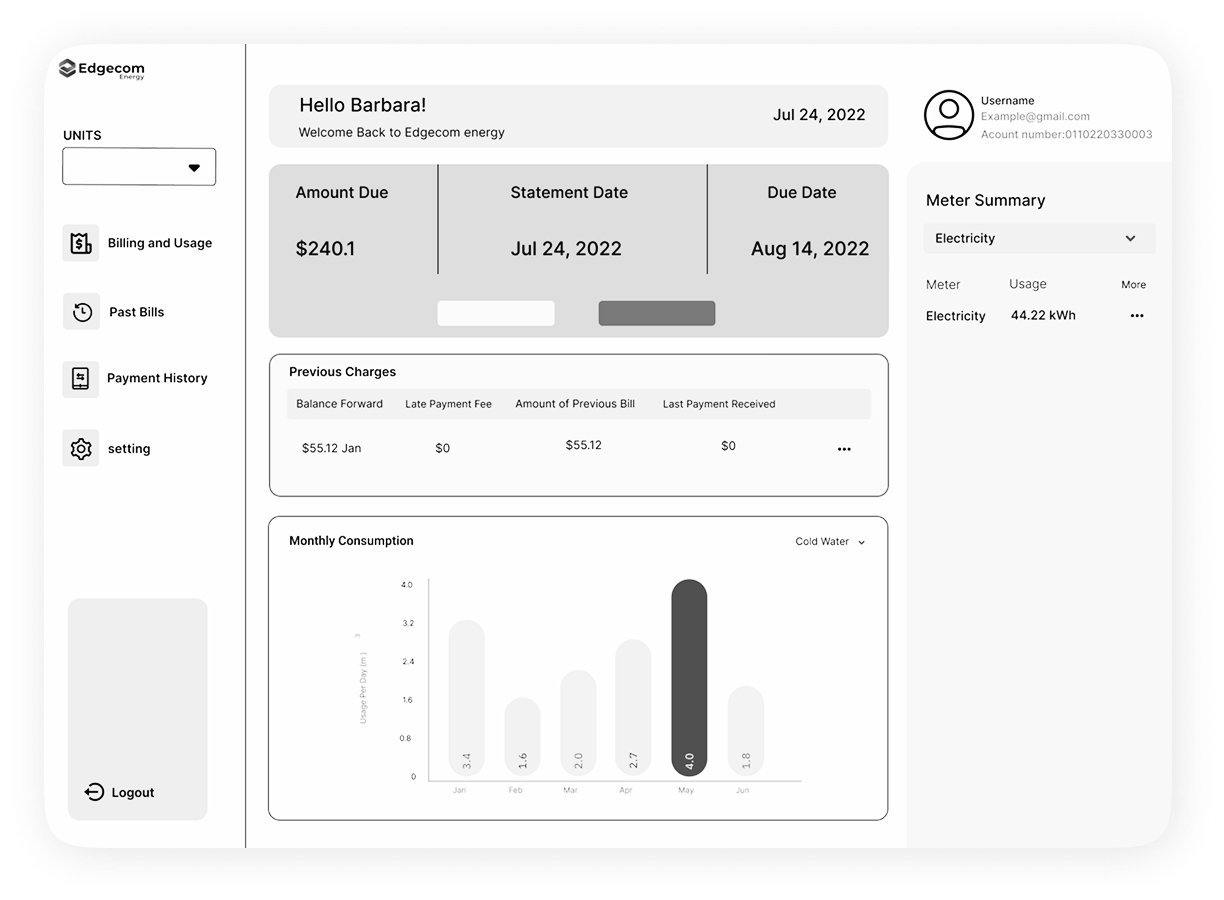
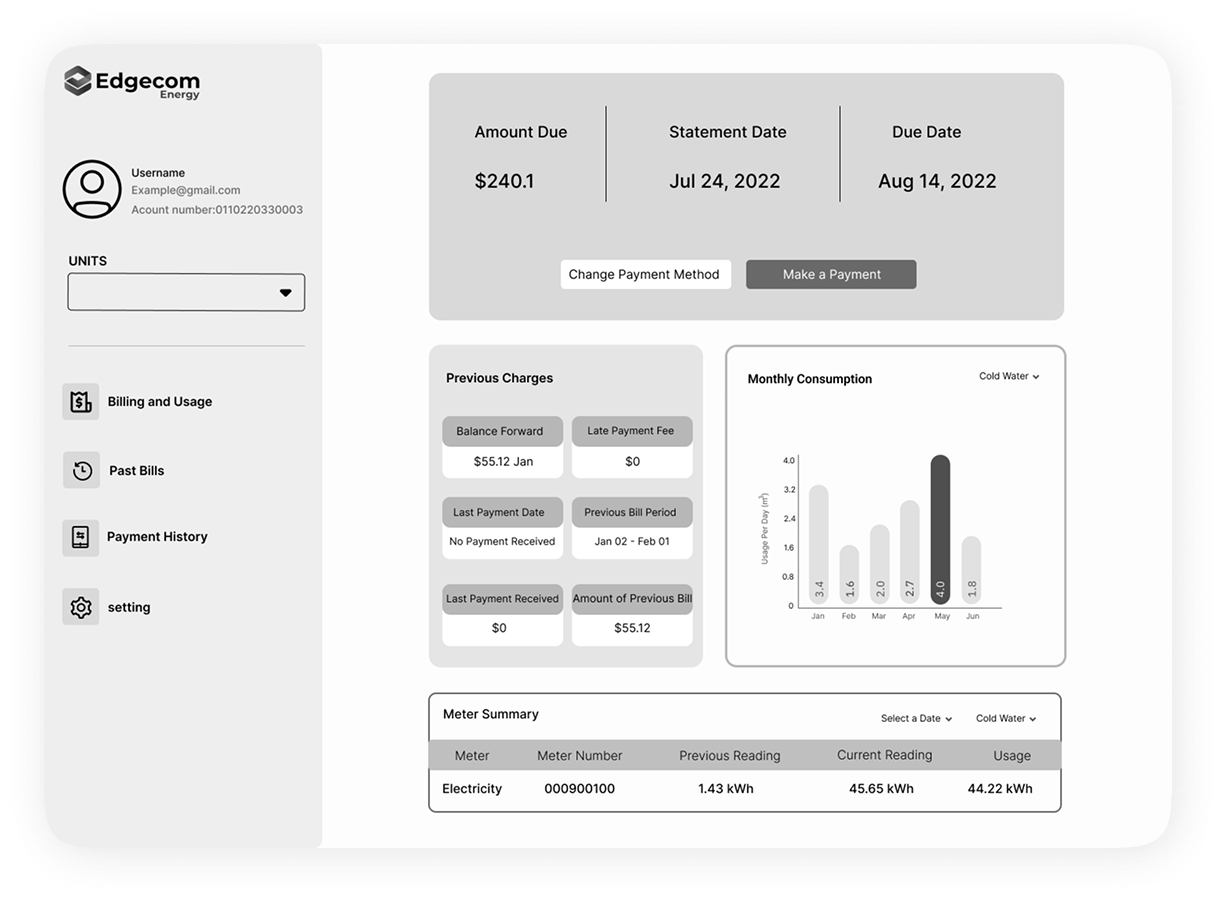
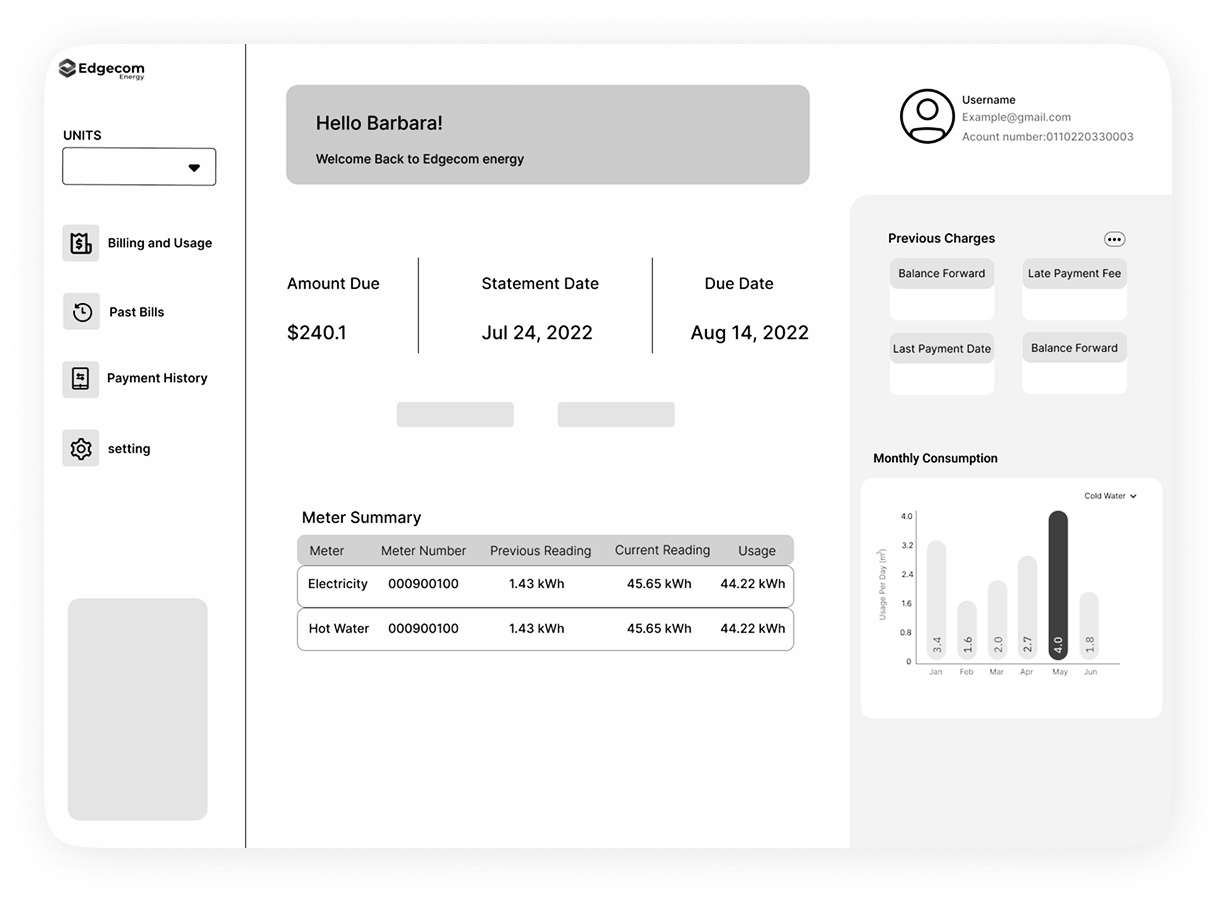
We created several wireframe iterations to refine the structure and usability of the dashboard. Each version focused on improving information hierarchy, simplifying navigation, and organizing data in a clearer way. Through these iterations, the layout became more intuitive, key sections were grouped more logically, and the overall experience became easier to scan and understand. These wireframes established a strong foundation before moving into the final visual design.
DESIGN
This design was approved for launch, even though we knew additional improvements would be made in future iterations. The project highlighted how balancing business goals with UX principles leads to practical, real-world solutions.